Showing posts with label American history. Show all posts

Who is Nellie Bly?


 Alright, not a food related person today, but one of my personal heroes of the Gilded Age.  This is an amazingly capable, strong woman, who deserves to be known, especially by those who have a thirst for adventure.

Born Elizabeth Cochrane on May 5th, 1867, Bly's father died when she was six years old, leaving her mother to care for a total of 15 children.  She moved to Pittsburgh at the age of 16 to find work, and dreamed of becoming a writer in an era when women who worked outside the home or the very narrow fields of nursing or teaching were often ridiculed.  Opportunity came by chance when at 18 she wrote a passionate anonymous response to the columnist Erasmus Wilson, who wrote for the Pittsburgh Dispatch as "Quiet Observer".  The paper was impressed, and placed an ad, requesting that she come forward, and giving her a nom de plume based on a popular Steven Foster song.


Such a domestic sentiment to try and temper her outspoken nature followed the early portion of Bly's career.  As she attempted to draw on her own experience, writing articles about conditions in tenements, and the difficulties faced by factory worker and maids, she pioneered many features of modern investigative journalism, going undercover and taking jobs herself, rather then simply relying on speaking to others.  Despite this groundbreaking approach, her work was often left in the middle of the society and garden section, the only place a select few women journalists had a voice.

In September of 1887, she managed to join the staff of  Joseph Pulitzer's The New York World, the beginning of her most amazing adventures.  She raced around the world in 72 days, beating all similar records set by men, exposed shady lobbyists, and covered the plight of unwed mothers.  She contrived her own arrest on larceny charges and reported her experiences being strip searched and spending the night in a coed jail, and interviewed controversial figures such as Susan B. Anthony and famous anarchist Emma Goldman. 

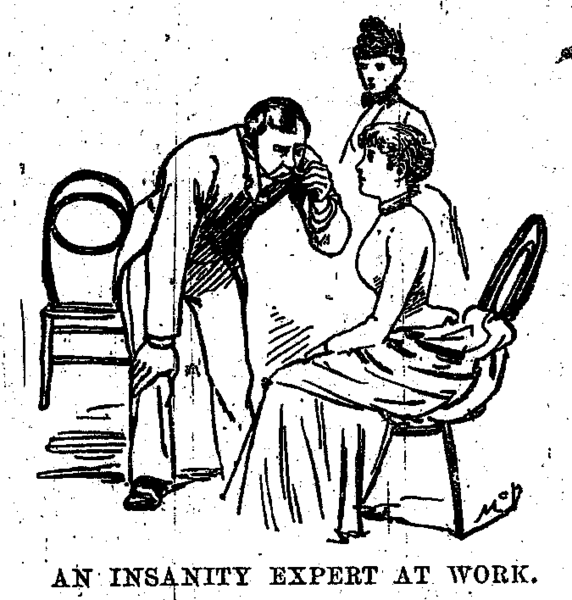
One such stunt which is particularly important in my mind, is the work Bly did to raise awareness of the plight of those who were considered insane.  In going undercover on Blackwell's Island, she entered the world of The Yellow Wallpaper, long before an understanding of issues such as anxiety disorders or  Post-Partum Depression.  While today psychological issues are still often poorly understood, and can still carry stigma, contempt, and fear, she courageously documented women who were wrongly imprisoned due to language difficulties or disabilities, or even due to something like disagreements with male family members.  While anxious but nonviolent to be admitted, and perfectly sane once inside, she was dismissed by doctors, threatened by nurses, and documented pest-filled food, cold, disease.  Here articles can be read in book form here under the title Ten Days in a Mad-House, and I would strongly recommend doing so. 

Authors like Nellie Bly remind us where we have been.  That only three generations ago, four at most, women could be imprisoned as mad simply on the word of their male relations.  We could not vote or run for office, and even if widows like my great-grandmother were prevented by social stigma from getting a better-paying job then the brutal life of a laundress.  In a divorce, the male spouse would keep whatever the woman had brought into the marriage, as well as the children, and have complete say over his wife's assets while married.  Women like Bly, Susan B. Anthony, and yes, even controversial spitfires like Emma Goldman are WHY we now have the rights we do.  Many women in the world still do not, and it's important to remember that, and not go backwards.  We stand on the shoulders of our great-grandmothers. I only hope I can live up to standing on the shoulders of the likes of Nellie Bly.

Book Review: 1001 Ways to Please a Husband


I stumbled on this one in a local thrift shop in Idaho, bearing the stamp of the "Cuyahoga County Public Library", and the copyright date 1958.

Apparently, it was a common practice in the first half of the 20th Century to write cookbooks geared specifically towards new brides. Because of this, the book contains basic, useful advice about making good use of the freezer, cooking with cheaper cuts of meat, budgeting and finance advice, and menu planning. Much of this would still be useful today, and I found the freezer section helpful in my ongoing efforts to reduce plastic in my kitchen.

It turns out that Myra Waldo, the author, was well-known at the time for her international cookbooks(even ones on South American and African cuisine), in addition to a successful career as the food consultant for Pan American Airlines.  While I can't find a birth-date for her, the date on the cookbook means that she was definitely at the height of her career, explaining the mix of recipes ranging from new and upcoming(fondue) to classic French, to Victorian foods beginning to disappear(potted meat), in addition to expected 50's fare of biscuit crusts, canned soup casseroles, and various meat-based loaves. All-in-all still healthier then the food served in many modern American homes.

What is even more interesting to me, though, is what her commentary tells the reader about 50's perceptions of a good housewife.  Little fictional diary entries through the book tell the story of the first year of marriage for Peter and Jane, and follow Jane's first efforts at such challenges as cooking on a particularly tight budget and acting as a hostess for girl's luncheons, cocktail parties, and dinners.

This is easily the most fascinating aspect of the book to me. Jane is shallow And officious, convinced of her own irrationality. She gloats when her husband is inept in the kitchen, and seems determined to prove herself better at homemaking then her friends, even occasionally at their expense. Particularly cringe-inducing is her insistence on feeding "exotic" friends dishes from their native lands, as a vehicle to introduce such exotic ideas as pizza and fillet of sole, bonne femme. Thus, the introduction to a Sukiyaki recipe is all about Peach Blossom, the Japanese War Bride who (gasp) speaks perfect English and rushes to obey her spouse's every whim.

A moment of culture shock, indeed. It's easy to forget just how much more acceptance there is now in terms of different ethnicities, interracial marriage, and even something as basic to the "plot" as a woman's ability to run her own life. An excellent reminder that, while the past is fun, I'm fairly sure I wouldn't want to live there...especially when there is still so much room for racism in modern American culture.

Jane, commenting on the meal "her Japanese War Bride" helps prepare;
It was simply delicious, and I don't know where I ever got the idea that Japanese people eat nothing but seaweed soup and raw fish...I had made a chocolate roll for dessert, not knowing whether or not anyone would be able to eat the sukiyaki. But they ate the sukiyaki down to the last spoonful and then proceeded to devour the chocolate roll. P.B. thought the chocolate roll was terrific, and asked me for the recipe. The United Nations? I suppose P.B. and I did our little bit to further international relations in our own quiet way.

A simple but international menu:
Sukiyaki
Beer
Chocolate Roll

My Japanese War Bride Sukiyaki from 1001 Ways to Please a Husband by Myra Waldo, 1958
(for six to eight)

3 onions
1 cup celery
1 cup canned bamboo shoots
1/2 pound mushrooms, or 2 cans, sliced
4 scallions (green onions)
2 pounds sirloin steak
4 tablespoons salad oil
1/2 cup stock or 1/2 boullion cube dissolved in 1/2 cup boiling water
3/4 cup soy sauce
1/4 cup sugar
1 tablespoon sherry
1 pound vermicelli or thin noodles, boiled and drained

Sukiyaki is fun to prepare--you can cook it almost as the Japanese do-- at the table in a chafing dish or electric skillet, or on the range in a skillet. Prepare the vegetables early in the day or whenever you have time and wrap them individually in aluminum foil, waxed paper, or Saran wrap. When you're ready to cook it, the entire operation will just take a few minutes.

Slice the onions very thin. Cut the celery in 1-inch lengths. Slice the bamboo shoots, mushrooms, and scallions.

Cut the steak into strips 2 inches long by 1/2 inch wide. Mix the stock, soy sauce, sugar, and sherry in a bowl.

Don't begin to cook the dish more then 15 minutes before you are ready to serve it.

Heat the oil in the utensil of your choice. Place the steak in it, and brown on all sides. Push the meat to one side of the pan and pour half the soy sauce mixture over it. Place the onions and celery in the pan and cook over medium heat for three minutes. Push to one side. Add the bamboo shoots, mushrooms, and remaining soy sauce mixture to the pan and cook 3 minutes, add the scallions and cook 1 minute.

Serve directly from the skillet, or heap the vermicelli on one side of a heated platter, and arrange the sukiyaki in the other.

Chocolate Roll

2 squares(ounces) unsweetened chocolate
2 tablespoons brewed coffee
4 egg yolks
3/4 cups sugar
6 tablespoons sifted cake flour
1/2 teaspoon baking powder
1/4 teaspoon salt
1 teaspoon vanilla
4 egg whites
Cocoa

Turn on the oven and set at 400 (hot).

Grease a jelly-roll pan (11 x 16 inches) and line with waxed paper. (GGK note: it would be much wiser to do this with parchment paper, as waxed paper is not designed to get hot.)

Combine chocolate and coffee in a cup; place over hot water and let melt.

Beat the egg yolks until light; add the sugar to the yolks, beating well. Sift the combined flour, baking powder, and salt over it, mixing until blended. Stir in the vanilla and chocolate.

Beat the egg whites until stiff but not dry. Fold into the previous mixture thoroughly. Spread evenly in the pan.

Bake 13 minutes or until a cake tester comes out clean. Loosen the bottom by running a spatula under the cake.

Sprinkle a towel with cocoa and turn the cake out onto it. Carefully peel the paper from the cake. Roll up gently in the towel and let cool for one hour. Don't worry if the cake cracks. Unroll and fill with whipped cream, ice cream, or soft custard. Re-roll and serve.

Soda Bread and Colcannon...St. Patrick's Day!


I'm sure most Americans are somewhat familiar with St. Patrick, so I'm not going to get into his story, like I did with St.David of Wales, as the average American schoolchild has surely been told the story about St. Patrick driving the snakes from Ireland, whether they see it as a veiled reference to earlier pagan practices or not.   

...and orangutans, a breakfast cereals, and fruit bats, and large chunks of oatmeal, and bananas, and raisins, and koalas, and blueberries...


It's always fascinating to see how the Industrial Revolution changed even the most basic aspects of our modern life.  Before, I've mentioned the affect it had on when we had our meals...leading to the creation of teatime, to fill the gap that was created.  Today, though, I'd like to discuss how it has affected what we eat for a given meal, specifically breakfast.  Because until 200 years ago, there really was no such thing as breakfast cereal.

Leeks and Daffodils--Happy Early Saint David's Day!


"Be joyful, and keep your faith and your creed. Do the little things that you have seen me do and heard about. I will walk the path that our fathers have trod before us."--Saint David

If you're American, chances are that March equals St. Patrick's Day.  Did you know, though, that each of the portions of the United Kingdom have a patron saint, and a local celebration of their unique culture and roots?

There is Steam in My Kitchen!

If you are unfamiliar with the concept of Steampunk, Scifipedia explains it rather succinctly as something that, "is set in an era or world where steam power is still widely used—usually the 19th century, and often set in Victorian era England—but with prominent elements of either science fiction or fantasy, such as fictional technological inventions like those found in the works of HG Wells and Jules Verne .."

Of course, there's a lot more too it then that.   To me, as (obviously) a fan of the Victorian and Edwardian, it speaks of a time when there was still a possibility for adventure, where corners of the world still lurked undocumented.  It makes one wonder what might have been, without the advent of plastics, with style and manners retaining a softer look.

Of course, promptly after my little  mental airship into fantasy, the cook in me asks, what about the food?  I think there are a couple of ways someone might go on this.

The Gimmicky:

This is what we get into a lot when I see this topic discussed on various Steampunk boards.  It is, to me at least, the equivalent of taking just any old brown clothing item, tossing cogs and watch bits on it, and calling it a day.  Not that sepia and cogs aren't cool--this cake has been making the rounds online and is very well done, to say the least.  Huge, Rube Goldberg-esque machines also don't do the trick for me.  Technology has always been about doing something faster, easier, or more efficiently. 

If you want to discuss Victorian diets and food gimmicks, that actually leads in some interesting directions, particularly since that era invented the concept of "health food".  The Reverend Sylvester Graham invented the the graham cracker, convinced that a diet high in fat led to sexual excess (which, according to Snope's, was actually one of his lesser food eccentricities).  A similar eclectic vegetarian and Seventh-Day Adventist, bored with the non-meat oriented options for the Victorian breakfast table, developed corn flakes.  Or, you have salisbury steak.  The good Dr. Salisbury firmly believed that "vegetables and starchy foods could produce substances in the digestive system which poison and paralyze the tissues and can cause heart disease, tumors, mental illness and tuberculosis."

The Historic:

I have a soft spot for this one.  English cuisine traditionally gets a bad rap, but if you go back to Georgian period cooking, or look at the French-Inspired haute-cuisine of the turn of the last century, you find a lot of flavors that have become classics (with many people clueless about how delightful the original was), or have in a mass-produced age fallen by the wayside for no good reason.  For a crash course in 19th Century cooking, I'd strongly recommend some of the links in the sidebar, as well as the book Last Dinner on the Titanic, which provides an excellent cross-section of fare for First, Second, and Third class passengers(the last of which, incidentally, eating more nutritiously then the average modern American home).    I would also recommend some of my recent posts, such as that about Peaches Melba. 

The Mad Scientist:

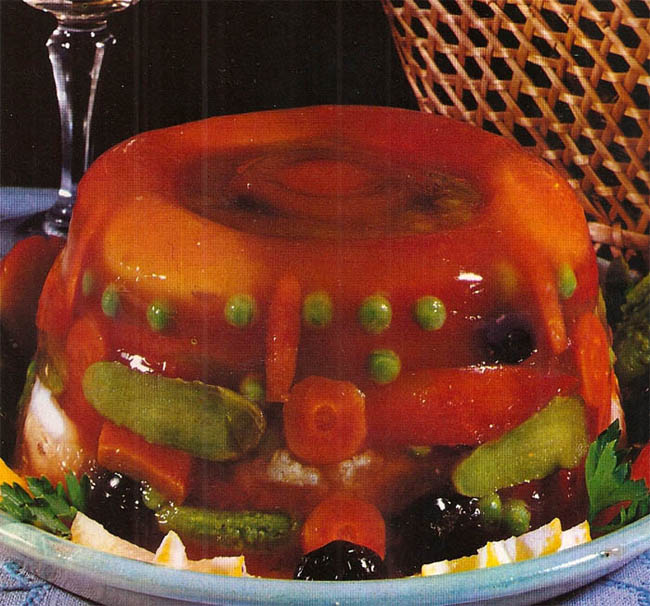
Yes, there is a time and place for steam in the kitchen;  what enthusiasts often forget is that there are literally hundreds of kitchen gadgets that we have compliments of the Victorians!  The can opener, 1858(with cans first coming into use during the Napoleonic war).  The first egg beater, invented in Rhode Island in 1870.  Gelatin desserts and aspic creations meant hours of slaving over a hot stove, and immense talent in the chef.  Scientists started experimenting with pressure cookers clear back in the 17th Century, billed as, "A New Digester or Engine, for softaing bones, the description of its makes and use in cookery, voayages at see, confectionary, making of drinks, chemistry, and dying, etc.", but started to really come into it's own with industrial kitchens.  Personally, I can't think of a better example of Steam in the kitchen!

The Exotic:

Yes, traditional 19th Century food is often seen as boring, but it really was an age of discovery.  Foods began to circle the globe.  Curry and exotic spices which hadn't been common since the Middle Ages began to make a regular appearance in European cooking.  Foods like tomatoes and potatoes from the Colombian Exchange circled the globe with Caucasian colonists, permanently changing the face of food.  There were also bad affects--particularly when it came to the mass-produced, nutritionally deficient food that became desired as a symbol of position and upward mobility under Colonial Rule. The same thing also occurred with American immigrants, since cooking the "American Way" was considered a necessary part of fitting in, leaving old customs, and ways of dressing and eating at the door as much as possible. 


So what can be taken from all of the above?  I personally believe that Steampunk Food should be like Steampunk literature--taking what was in the direction of what might have been.  Instead of trying to slap "steam" on top of something already in use, or clinging to historical authenticity, there are some questions that we cooking enthusiasts should be asking ourselves:

What was the big, new, thing back in the day?

How would it have been different with quicker global travel, a la airship(the things that were amazing treats on the Titanic are an excellent resource for this)?

What would a crew have eaten that could cover the globe in a month or so?  Like tattoos told the story of where a sailor had been, what flavors and ingredients would have been popular had shelf life not been such an issue?  Would they have remained strange and lower-class, or been embraced by chefs like Escoffier? 

With a little research, the possibilities really are endless!  Not only that, it's a great reason to start to cook from scratch, and really come to understand the degree to which we stand on the Victorian's shoulders in the kitchen, for better or worse.

The Gallery of Regrettable Food


As much as I love the old and retro, all of us have some meals that we look back on with a mixture of amusement and downright horror. 

Lips That Touch Liquor...


My husband's comment on the above picture: "Is that a threat or a promise?"


Since last time we talked about alcohol substitutions in food, I thought it would be helpful and interesting to do one on what our tea-totaling great-grandmother's would have consumed.