Showing posts with label biographies. Show all posts

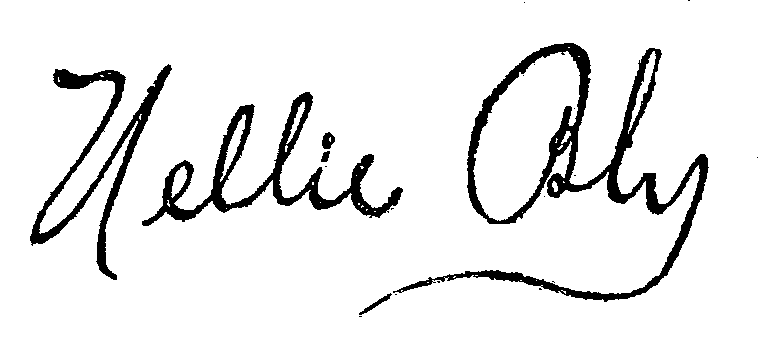
Who is Nellie Bly?


 Alright, not a food related person today, but one of my personal heroes of the Gilded Age.  This is an amazingly capable, strong woman, who deserves to be known, especially by those who have a thirst for adventure.

Born Elizabeth Cochrane on May 5th, 1867, Bly's father died when she was six years old, leaving her mother to care for a total of 15 children.  She moved to Pittsburgh at the age of 16 to find work, and dreamed of becoming a writer in an era when women who worked outside the home or the very narrow fields of nursing or teaching were often ridiculed.  Opportunity came by chance when at 18 she wrote a passionate anonymous response to the columnist Erasmus Wilson, who wrote for the Pittsburgh Dispatch as "Quiet Observer".  The paper was impressed, and placed an ad, requesting that she come forward, and giving her a nom de plume based on a popular Steven Foster song.


Such a domestic sentiment to try and temper her outspoken nature followed the early portion of Bly's career.  As she attempted to draw on her own experience, writing articles about conditions in tenements, and the difficulties faced by factory worker and maids, she pioneered many features of modern investigative journalism, going undercover and taking jobs herself, rather then simply relying on speaking to others.  Despite this groundbreaking approach, her work was often left in the middle of the society and garden section, the only place a select few women journalists had a voice.

In September of 1887, she managed to join the staff of  Joseph Pulitzer's The New York World, the beginning of her most amazing adventures.  She raced around the world in 72 days, beating all similar records set by men, exposed shady lobbyists, and covered the plight of unwed mothers.  She contrived her own arrest on larceny charges and reported her experiences being strip searched and spending the night in a coed jail, and interviewed controversial figures such as Susan B. Anthony and famous anarchist Emma Goldman. 
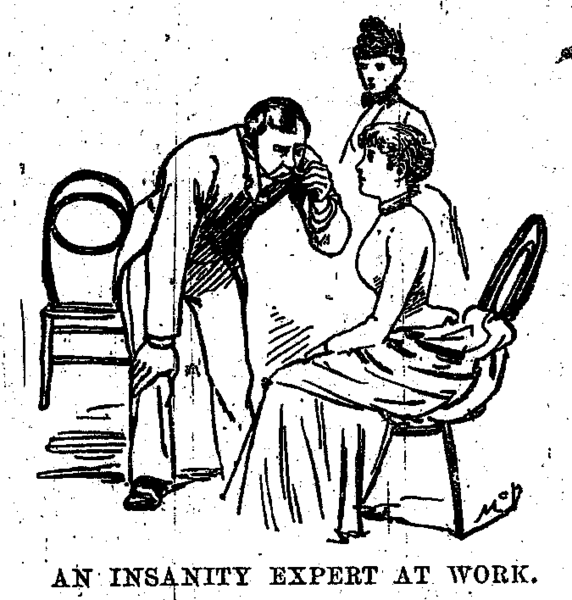
One such stunt which is particularly important in my mind, is the work Bly did to raise awareness of the plight of those who were considered insane.  In going undercover on Blackwell's Island, she entered the world of The Yellow Wallpaper, long before an understanding of issues such as anxiety disorders or  Post-Partum Depression.  While today psychological issues are still often poorly understood, and can still carry stigma, contempt, and fear, she courageously documented women who were wrongly imprisoned due to language difficulties or disabilities, or even due to something like disagreements with male family members.  While anxious but nonviolent to be admitted, and perfectly sane once inside, she was dismissed by doctors, threatened by nurses, and documented pest-filled food, cold, disease.  Here articles can be read in book form here under the title Ten Days in a Mad-House, and I would strongly recommend doing so. 

Authors like Nellie Bly remind us where we have been.  That only three generations ago, four at most, women could be imprisoned as mad simply on the word of their male relations.  We could not vote or run for office, and even if widows like my great-grandmother were prevented by social stigma from getting a better-paying job then the brutal life of a laundress.  In a divorce, the male spouse would keep whatever the woman had brought into the marriage, as well as the children, and have complete say over his wife's assets while married.  Women like Bly, Susan B. Anthony, and yes, even controversial spitfires like Emma Goldman are WHY we now have the rights we do.  Many women in the world still do not, and it's important to remember that, and not go backwards.  We stand on the shoulders of our great-grandmothers. I only hope I can live up to standing on the shoulders of the likes of Nellie Bly.

Who is this Escoffier Guy Anyway?


It is almost impossible to discuss late Nineteenth Century food without talking about George Auguste Escoffier. But why?  Unless specifically looking for a recipe for Peaches Melba, it is almost impossible to find specific recipes tied to his name. 

The reason lies in organization. 

Escoffier began his career at 13, as an apprentice in his Uncle's restaurant in Nice, France.  At the time, French cuisine was dominated by the ideas of Marie-Antoine Careme (June 8th, 1784-January 12th, 1833) who had served as head chef for the future George IV of England, Emperor Alexander I of Russia, and Baron James de Rothschild.  

Careme was the original chef to write down french cuisine.  He meticulously organized it, for example writing down sauces by "Mother" Sauce:  Bechamel, Veloute, Espagnole, Hollandaise and Mayonaise, and vinaigrette.  To this day, if you know how to make each of those sauces, you can make any other sauce based in European cuisine...they are all variations on those five!  He also was famous for breathtaking edible centerpieces (an important part of great dinners of the day), and for being the first to heavily illustrate his cookbooks, giving chefs an end result to aim for, rather then just directions. 

A menu in Escoffier's hand, from the blog Les Recettes de Lous la Vache
Escoffier took Careme's ideas, the ultimate in French cuisine for almost one hundred years, and improved them.  Instead of simply encouraging cooperation between portions of the kitchen, he seems to have been inspired by Edwardian modernization in other fields.  The kitchen under Escoffier became a well-oiled machine, meticulously organized to turn out dishes in courses, requiring a feat of communication and skill in the kitchen. This method was called Service a la Russe, and was impressive in that hot dishes were served pipping hot, and cold dishes cold, as soon as they were wanted, rather then the impressive display of previous generations, which made room temperature dishes more advantageous, since there was no knowing when diners would get to a particular item. It's also the basis of fine meals today, starting with an appetizer (designed to prepare the pallet for what will follow), then soup, salad, and so forth.  He was known for his great attention to detail, often working up menus personally, based on the tastes of the diners. 

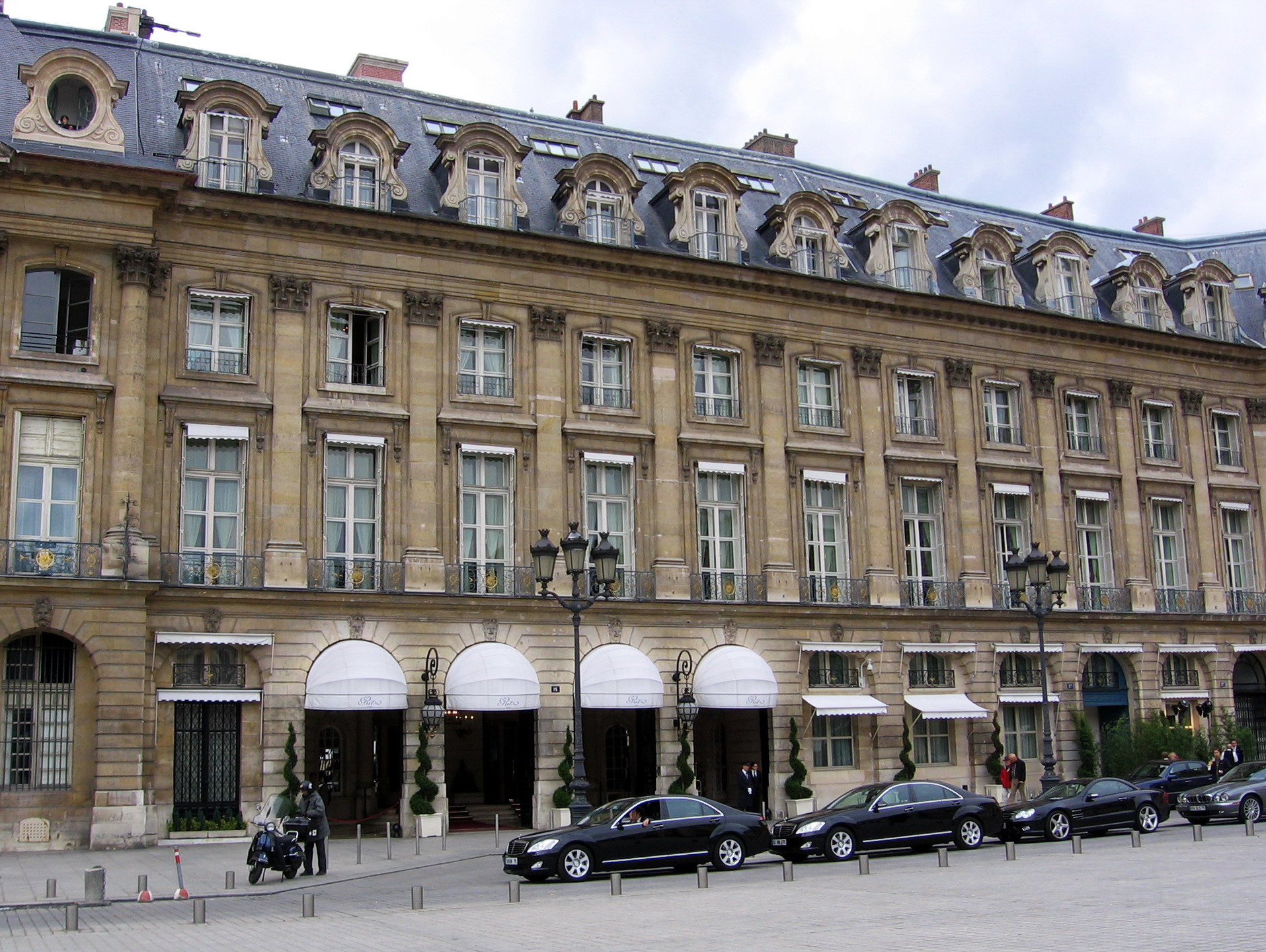
The Hotel Ritz, opened by Ritz and Escoffier in 1898
An excellent example of Escoffier's influence would be the menus served on the Titanic, as well as the famous hotel restaurants for the Ritz and Savoy hotels.  In fact, Escoffier and Cesar Ritz were friends for many years, both seeking to reform and modernize their professions.  This relationship may have also influenced Escoffier's invention of the a la carte restaurant, allowing diners to choose their meal for the first time.  In essence, the way modern food is presented, served, and handled in the kitchen, we owe to George August Escoffier.  An for this reason, many groups hold yearly dinners in his honor to this day. 


For a more detailed biography, look here.  

A translated compilation of Escoffier's writing is available from Amazon here. 

Happy Mother's Day!


The huge gap since my last post is due to a move, so my apologies.

It's a little hard to believe in our modern era of brunch and flowers for Mother's Day, but having a day to honor mothers actually has a long history. The ancient Greeks and Romans honored mother goddesses such as Cybele and Juno during the spring. For our Medieval ancestors, this evolved into celebrating Lady Day on the Spring Equinox (around March 25th), in honor of the Virgin Mary. One of the early calls for a mother's day in America was the impassioned poetry of Julia Ward Howe, author of Battle Hymn of the Republic. In her Mother's Day Proclamation, Howe expresses her horror at the bloodshed of the Civil War, and calls on her fellow mothers to use their role within the home to teach their children peace, as well as to become an active voice for peace outside of that sphere.

February 11th--The Frugal Housewife


On this date in 1802 Lydia Maria Francis Child was born. We don't usually recognize her name now, but your great-great( in my case perhaps one more great) grandmother would have. Her book, printed in 1829, The Frugal Housewife made her the Julia Child of the 1830's-50's.