Showing posts with label the Edwardians. Show all posts

Who is Nellie Bly?


 Alright, not a food related person today, but one of my personal heroes of the Gilded Age.  This is an amazingly capable, strong woman, who deserves to be known, especially by those who have a thirst for adventure.

Born Elizabeth Cochrane on May 5th, 1867, Bly's father died when she was six years old, leaving her mother to care for a total of 15 children.  She moved to Pittsburgh at the age of 16 to find work, and dreamed of becoming a writer in an era when women who worked outside the home or the very narrow fields of nursing or teaching were often ridiculed.  Opportunity came by chance when at 18 she wrote a passionate anonymous response to the columnist Erasmus Wilson, who wrote for the Pittsburgh Dispatch as "Quiet Observer".  The paper was impressed, and placed an ad, requesting that she come forward, and giving her a nom de plume based on a popular Steven Foster song.


Such a domestic sentiment to try and temper her outspoken nature followed the early portion of Bly's career.  As she attempted to draw on her own experience, writing articles about conditions in tenements, and the difficulties faced by factory worker and maids, she pioneered many features of modern investigative journalism, going undercover and taking jobs herself, rather then simply relying on speaking to others.  Despite this groundbreaking approach, her work was often left in the middle of the society and garden section, the only place a select few women journalists had a voice.

In September of 1887, she managed to join the staff of  Joseph Pulitzer's The New York World, the beginning of her most amazing adventures.  She raced around the world in 72 days, beating all similar records set by men, exposed shady lobbyists, and covered the plight of unwed mothers.  She contrived her own arrest on larceny charges and reported her experiences being strip searched and spending the night in a coed jail, and interviewed controversial figures such as Susan B. Anthony and famous anarchist Emma Goldman. 

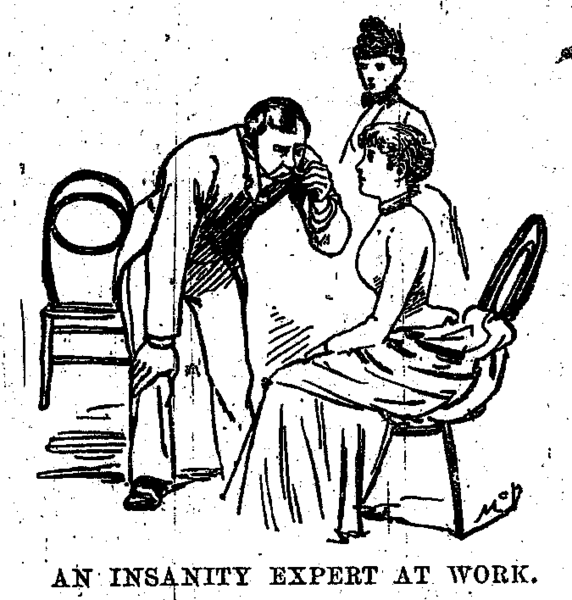
One such stunt which is particularly important in my mind, is the work Bly did to raise awareness of the plight of those who were considered insane.  In going undercover on Blackwell's Island, she entered the world of The Yellow Wallpaper, long before an understanding of issues such as anxiety disorders or  Post-Partum Depression.  While today psychological issues are still often poorly understood, and can still carry stigma, contempt, and fear, she courageously documented women who were wrongly imprisoned due to language difficulties or disabilities, or even due to something like disagreements with male family members.  While anxious but nonviolent to be admitted, and perfectly sane once inside, she was dismissed by doctors, threatened by nurses, and documented pest-filled food, cold, disease.  Here articles can be read in book form here under the title Ten Days in a Mad-House, and I would strongly recommend doing so. 

Authors like Nellie Bly remind us where we have been.  That only three generations ago, four at most, women could be imprisoned as mad simply on the word of their male relations.  We could not vote or run for office, and even if widows like my great-grandmother were prevented by social stigma from getting a better-paying job then the brutal life of a laundress.  In a divorce, the male spouse would keep whatever the woman had brought into the marriage, as well as the children, and have complete say over his wife's assets while married.  Women like Bly, Susan B. Anthony, and yes, even controversial spitfires like Emma Goldman are WHY we now have the rights we do.  Many women in the world still do not, and it's important to remember that, and not go backwards.  We stand on the shoulders of our great-grandmothers. I only hope I can live up to standing on the shoulders of the likes of Nellie Bly.

Shampoo, or Lack Thereof

From the Hair Archives
Normally, I stay roughly on Kitchen topics at GGK, however, my friend Thalassa over at Musings of a Kitchen Witch has been talking lately about other ways then shampoo to keep hair clean(you can find her posts here and here).  Since I no longer use traditional shampoo either, she asked me to talk about what I do as well.

Now, shampoo as we know it, didn't exist until the 30's.  While some shampoos began to hit the market in the early 1900's, they caused alkaline reactions, leaving a gray film on hair.  Dr. John Breck invented the first PH-balanced shampoo, and the companies ad campaign, featuring Breck Girls, lasted well  into the late 70's. 
Olga Armstrong, the first Breck Girl
This led to a cultural expectation of frequent hair washing., and the idea (at least in America), that oil in hair means that it's dirty.  I grew up in a family in which everyone washed their hair every morning, and my grandmother told horror stories about her years as a school teacher, and trying to get shampoo for one of her students who was teased for her stringy hair, only to have the child's mother say it "looked too fly-away" and put grease on it!  Even so, my grandmother would get her hair done at the hairdressers once a week, and usually only washed it mid-way if she had to, as it spoiled her look.

Cleo De Merode
So what did our ancestors do before the shampoo revolution?  According to this Victorian care guide, the solution was similar to many today who find that, unless their hair gets some foreign dirt in it, it needs no soap at all.  The guide stresses the importance of using a boar's bristle brush, and keeping it immaculately clean (even going so far as to suggest cleaning it with a diluted ammonia solution periodically).  It also suggests using a Castile soap (which has olive oil as a base, rather then the very harsh lye soaps which were the period alternative--no wonder people didn't use them on their heads!). The basic outline of their routine is to wash hair once per week.  Use Castile soap if one's hair is oily, but if it's dry, an egg yolk is a good alternative. and is a common cleaner for modern no-shampoo folks.  Hair was supposed to be brushed every night, the old "100 strokes" idea, which with a boar's brush and gently done, pulls oil down the length of the hair, keeping it from getting oily up at the roots, and drying at the base.  It's worth noticing, too, that it's suggested to rub the hair with flannel after, I'm assuming to soak up any additional oil the hair doesn't need.

If you want a great example of someone trying this method out, The Gibson Girl's Guide to Glamor has a very interesting post on the matter. 

So what do I do?  As an adult, I found that my hair did much better only being washed every second or third day (often depending on factors like how dry the weather is, where I am in my muenstral cycle, and stress).  While hair experts often disagree about how often is too often, many say that we wash our hair too often now, stripping it of it's natural oils at a rate that encourages the body to overproduce oil to catch up.

Via. Rapunzel's Delight 
A few years ago, I tried using no shampoo at all, and found it doesn't work well for me, personally.  My hair is baby fine, thin, and prone to being oily(especially at that time of month), and so all it did was slick to my head.  Someone with dry hair would have completely different results, though, and my friends who have tried this sort of experiment with "frizzy" hair find they often suddenly have curls.


More recently, I became interested in Castile soap and switched to Dr. Bronner's Magic Soap, available at health food stores, and now at Target.  The label is truly amusing...it contains everything from recipe ideas to scripture references, and reads like a 19th Century cure-all peddler's schtick.  However, I have to say, the stuff works.  I have switched to diluted forms of it for hand soap and cleaning, too.  Direct from the bottle it is very strong, and will leave your hair stripped and tangled...I strongly discourage using it that way!

My Shampoo Recipe

3T-4T Dr. Bronner's Soap (whatever scent you prefer...eucalyptus can help with dandruff, though)
A few drops of Essential Oils
1T Extra Virgin Olive Oil

Add to bottom of a large empty shampoo bottle.  Fill almost to top with filtered water.  Shake every time before use...this will leave a lot of foam on top that will make it easy to lather.

I use a rinse after that is Rosemary tea, and about a quarter cup of apple cider vinegar. Since the Castile soap is gentle, but not PH balanced, it makes up for that.  The Rosemary is because I have dark hair, and am prone to a bit of an itchy scalp in winter.  For other suggestions, go to my second link from Musings of a Kitchen Witch above.

Even though my hair is currently very short, I also brush it regularly.  I find that it's more important to stimulate my scalp then anything else...and my hair is much healthier with more body.  Like the Victorians, get a good brush and clean it often!  Also, if you try this, expect to need less product...a lot of our modern hair products are designed to make up for removing our body's natural oils.

The Amazing Seven Sutherland Sisters!
Did you notice how much olive oil I put in?  That has reduced how oily my hair is, ironically enough...it also helps to calm my scalp down with dry winter weather.  My husband's hair is not as oily as mine, though, and responds better with just a few drops of olive oil (his hair has become much more manageable, as well).  Another interesting side effect is that I no longer have little eczema patches on my back and arms, something I've battled for years!

What about those days when I don't have time to wash, or I'm almost to a shampoo and my hair is looking nasty?

Corn Starch Dry Shampoo

1 cup Corn Starch
Essential oils to scent the hair, or dry herbs (will scent it much more slowly...I like mint)


Mix together and store in a small container in the bathroom.  To use, take about a tablespoon of the cornstarch, and rub it all over your scalp.  Don't worry about ends so much...just where it looks greasy.  Then brush, brush, brush.  It takes about 5 min to not look like a ghost.  You will be surprised at how full your hair feels (this is also a great thing to do before trying some of those old hairstyles).

So there you go!  This is what works for me, personally.  If you have something you do and love, please share it in the comments!

Book Review: Last Dinner on the Titanic


"I well remember that last meal on the Titanic.We had a big vase of beautiful daffodils on the table, as fresh as if they had just been picked.  Everybody was gay, and people were making bets on the probable time of this record-breaking voyage." 
                                                             --First-class passenger Lady Duff-Gordon


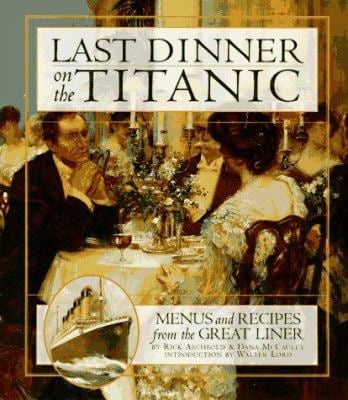
I have owned this book for about ten years now, and still smile when I dust it off.  As my experience with cooking grows, I find that different parts of it speak to me.  This time around, I've pulled it off the shelf for a very exciting reason:  my local Steampunk group, The Innovative Society of Victorian Irregulars, has decided to do a Titanic dinner as our big spring event next April.  With good reason, too.  The evening of Saturday, April 14th, 2012 will mark the 100 year anniversary of the last meal served on the Titanic, which met it's infamous demise at 2:20 am on April 15th, 1912. 

Prints available from allposters.com
If you have an interest in Edwardian food, this book has it all.  It very clearly states when it knows a particular dish was served (and when their choice is educated guesswork), and the directions are precise.  Menus are included for the A La Carte restaurant, the First Class Dining room, Second Class, and Third Class (which,  with a lunch menu of vegetable soup, roast pork with sage and pearl onions, green peas, boiled potatoes, plum pudding, and oranges, ate better then the average American household).

From the Titanic Historical Society site.
The other joy of this book is the plethora of pictures, notes, music suggestions, and copies of actual bills of fare, baggage claim tickets, etc. from the Titanic or it's sister ship, the Olympic. 

If planning a party, the Appendix is singularly useful, including advice on Edwardian customs,  proper invitation ettiquete, what to wear, and table settings.  There is also a fascinating grouping of mini-biographies, allowing you to assign guests the persona of a specific guest if so desired.


RMS Titanic First Class Dinner Menu
April 14, 1912

Hors D'oeuvre Varies
Oysters


Consomme Olga

Cream of Barley

Salmon, Mousseline Sauce, Cucumber

Filet Mignons Lili
Saute of Chicken, Lyonnaise
Vegetable Marrow Farcie

Lamb, Mint Sauce
Roast Duckling, Apple Sauce
Sirloin of Beef, Chateau Potatoes


Green Peas

Creamed Carrots
Boiled Rice
Parmentier & Boiled New Potatoes

Punch Romaine

Roast Squab and Cress
Cold Asparagus Vinaigrette
Pate De Foie Gras
Celery

Waldorf Pudding
Peaches in Chartreuse Jelly
Chocolate & Vanilla Eclairs
French Ice Cream


This, of course, was followed by fruit and cheese, as well as cigars in the smoking room for the gentlemen (whew!).  Obviously, a shortened version is sufficient for most groups...

Something else to keep in mind is that part of what was considered impressive about the Titanic was that it was state of the art for the era.  In the kitchens, massive refrigeration unites, ovens, and stoves meant that cooks were capable of pulling off all of the same tricks as the finest restaurants of the day.  What a thrilling thought for the technophile!

While I would suggest getting the book, due to the plethora of additional useful information, recipes can be previewed at these sites:

La Belle Cuisine

Eras of Elegance

The Titanic About.com guide by Donna Pilato

And for a very interesting provisions list, go here (the scale of it is boggling).


Who is this Escoffier Guy Anyway?


It is almost impossible to discuss late Nineteenth Century food without talking about George Auguste Escoffier. But why?  Unless specifically looking for a recipe for Peaches Melba, it is almost impossible to find specific recipes tied to his name. 

The reason lies in organization. 

Escoffier began his career at 13, as an apprentice in his Uncle's restaurant in Nice, France.  At the time, French cuisine was dominated by the ideas of Marie-Antoine Careme (June 8th, 1784-January 12th, 1833) who had served as head chef for the future George IV of England, Emperor Alexander I of Russia, and Baron James de Rothschild.  

Careme was the original chef to write down french cuisine.  He meticulously organized it, for example writing down sauces by "Mother" Sauce:  Bechamel, Veloute, Espagnole, Hollandaise and Mayonaise, and vinaigrette.  To this day, if you know how to make each of those sauces, you can make any other sauce based in European cuisine...they are all variations on those five!  He also was famous for breathtaking edible centerpieces (an important part of great dinners of the day), and for being the first to heavily illustrate his cookbooks, giving chefs an end result to aim for, rather then just directions. 

A menu in Escoffier's hand, from the blog Les Recettes de Lous la Vache
Escoffier took Careme's ideas, the ultimate in French cuisine for almost one hundred years, and improved them.  Instead of simply encouraging cooperation between portions of the kitchen, he seems to have been inspired by Edwardian modernization in other fields.  The kitchen under Escoffier became a well-oiled machine, meticulously organized to turn out dishes in courses, requiring a feat of communication and skill in the kitchen. This method was called Service a la Russe, and was impressive in that hot dishes were served pipping hot, and cold dishes cold, as soon as they were wanted, rather then the impressive display of previous generations, which made room temperature dishes more advantageous, since there was no knowing when diners would get to a particular item. It's also the basis of fine meals today, starting with an appetizer (designed to prepare the pallet for what will follow), then soup, salad, and so forth.  He was known for his great attention to detail, often working up menus personally, based on the tastes of the diners. 

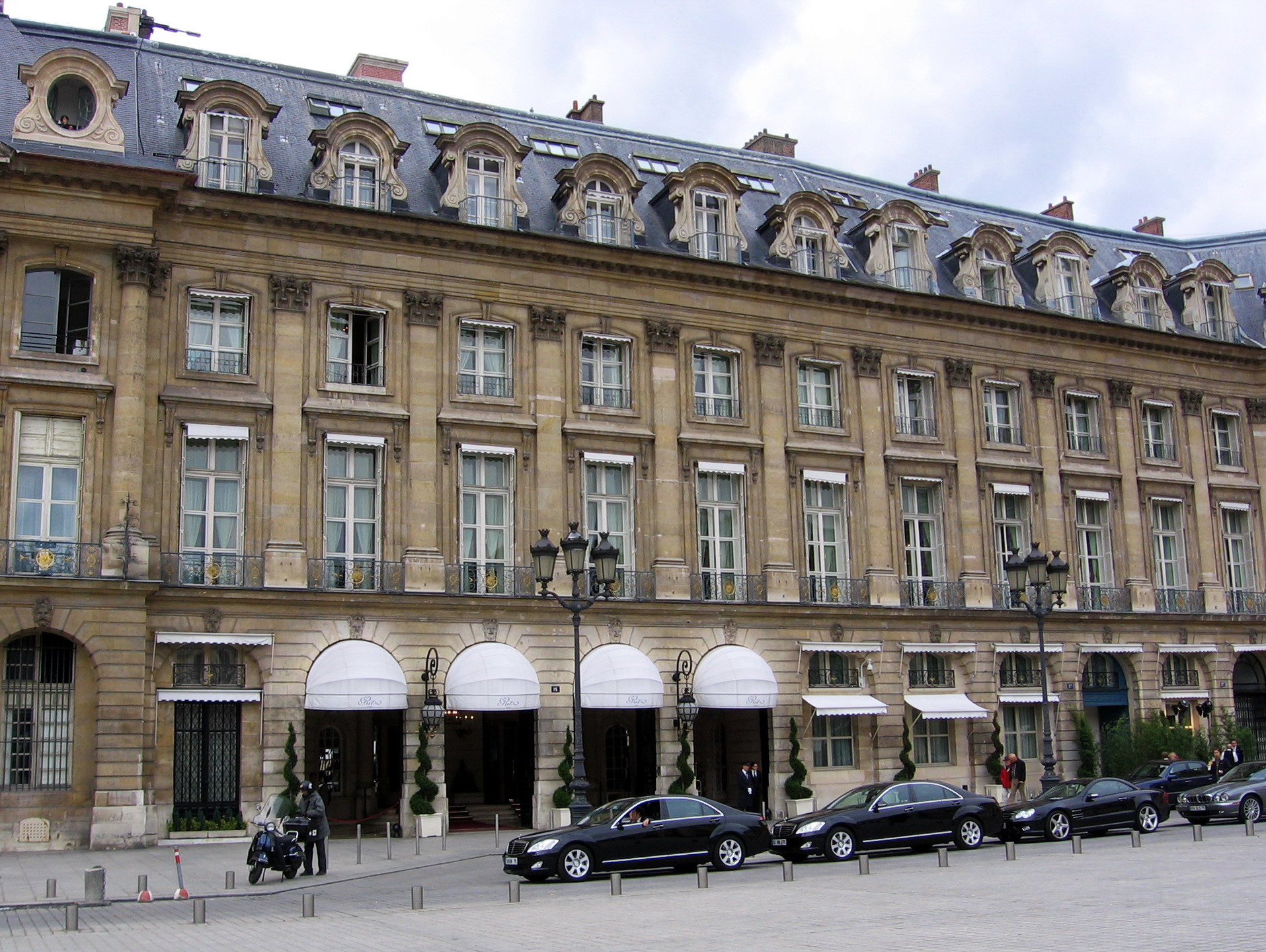
The Hotel Ritz, opened by Ritz and Escoffier in 1898
An excellent example of Escoffier's influence would be the menus served on the Titanic, as well as the famous hotel restaurants for the Ritz and Savoy hotels.  In fact, Escoffier and Cesar Ritz were friends for many years, both seeking to reform and modernize their professions.  This relationship may have also influenced Escoffier's invention of the a la carte restaurant, allowing diners to choose their meal for the first time.  In essence, the way modern food is presented, served, and handled in the kitchen, we owe to George August Escoffier.  An for this reason, many groups hold yearly dinners in his honor to this day. 


For a more detailed biography, look here.  

A translated compilation of Escoffier's writing is available from Amazon here. 

5 Mad Scientist Kitchen Gadgets I'm Still Waiting to See Steampunked

Antique Gallery here. 


We owe a lot of our modern kitchen appliances to the Industrial Revolution.  Stoves that could change temperature by the twist of a knob, potato peelers, canned foods, and cookie cutters are all products of Victorian or Edwardian ingenuity.  So why isn't there more Steampunking of the kitchen going on?  Sure, Steampunk Home and Kitchens.com have some great ideas for the overall kitchen area, but if I can type in a few quick keystrokes and come face to face with a beautifully steamed computer or laptop that looks like a music box, why is the same not true for some of my favorite toys?


5.  The Teakettle.

Worthpoint.com
Where would I be without listing this one first?  A staple in 19th Century households, and a vital belonging for Steampunks and Professor Elemental fans everywhere. 

From Craigslist for $185...talk about a bargain.
This is a case where the trappings are the fun part.  Most American and Western European kettles are simple and recognizable, but in Russia, it went a step further.  Due to the cold weather all year, many families had a treasured Samovar.  These never caught on in America, but were a common feature in Jewish and Slavic neighborhoods in big cities in the 19th Century. 

4. The Pressure Cooker

From Modern Pressure Cookers
These have been around for a very long time...since the 17th Century (check out a beautiful brass and silver Appert model here).  It was only in the early 20th Century that they gave up their heavy (and hopefully explosion-proof) look, with all sorts of interesting knobs and gauges and steam in exchange for the simplified light-weight versions popular for home canning.  Marketing also traded in the slightly stomach churning name of "Steam Digestor"...doesn't the sound of that just make you want to rush to put its contents on your plate?

If you plan on looking for old pressure cookers, though, be careful! Given their nature, they are dangerous stuff if not calibrated properly, or if time has damaged them in some way.  With those safety concerns in mind, this is one that if found might be better suited to a decoration, or becoming a component of a bigger(and low pressure) contraption. Not sure what to do with one, even if you had one?  Go here!

3. The Ice Cream Maker
1900 model from the Journal of Antiques and Collectables.

Patent for the small-scale hand crank type goes to Nancy Johnson in 1843.  According to the Journal of Antiques and Collectables, by the Civil War there were about 50 different versions of the bucket style machines, and they're still available today if you know where to look.
5 gallon churn attached to a 1926 Hercules Engine.
The concept is simple, and much less dangerous to tinker with then some of the other contraptions on this list:  The inner container holds ingredients, with a paddle to mix them, while the outer canister holds ice and salt, to bring the temperature below freezing.  The combination of the cold and churning creates the ice cream.  I'm fairly sure most steampunk tech-heads(would that make them steamheads?) can get some good ideas from there...


From HomeBarista.com
2. The Espresso Machine.

1901 gave us the Tipo Gigante, a machine invented by Luigi Bezzera to use steam to force hot water through the coffee grounds, hopefully reducing the time his employees took for their coffee breaks.  The result was fast, but bitter.  Desiderio Pavoni, who bought Bezzera's patent, experimented with temperatures and landed at the 192F standard for modern machines.  The Victoria Arudino models will blow your mind.
Exhibit A

 1. The Kitchenaid

Invented 1908, the H-5 home model came around in 1919. According to KitchenAid,
"...all stand mixer attachments will fit any KitchenAid Stand Mixer, including the original." This means that theoretically, one could find an original H-5 and put it to use. 


The H-5, according to DecoDan.com it sold for $189.50 in 1915, no attachments!
These things are essentially a decent little engine with kitchen bits attached...what isn't to love about that?  While there are various sites that make decals for them (and I wouldn't mind seeing a pretty copper one like my mother in law's with cogs on it), I almost wish there was a safe way to put a window in the side so that one could see the inner workings without  it becoming dangerous.  There are even people out there who custom paint them, and although I've been tempted on more then one occasion to try that myself with my plain white one, I'd rather not end up with the sort of paint I have handy in my food. 

Oh, well, one can always dream, can't they?

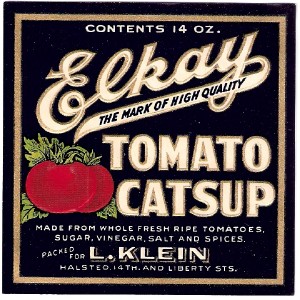
Real Tomatoes in Every Bottle!


I tried my hand at ketchup making for the first time this past week and the results were interesting.  Two recipes:  The first was one of the first recorded recipes for tomato catsup (yes, there are other kinds...more on that in a moment) from Mrs. Mary Randolf's The Virginia Housewife: Or, Methodical Cook.

...and orangutans, a breakfast cereals, and fruit bats, and large chunks of oatmeal, and bananas, and raisins, and koalas, and blueberries...


It's always fascinating to see how the Industrial Revolution changed even the most basic aspects of our modern life.  Before, I've mentioned the affect it had on when we had our meals...leading to the creation of teatime, to fill the gap that was created.  Today, though, I'd like to discuss how it has affected what we eat for a given meal, specifically breakfast.  Because until 200 years ago, there really was no such thing as breakfast cereal.

There is Steam in My Kitchen!

If you are unfamiliar with the concept of Steampunk, Scifipedia explains it rather succinctly as something that, "is set in an era or world where steam power is still widely used—usually the 19th century, and often set in Victorian era England—but with prominent elements of either science fiction or fantasy, such as fictional technological inventions like those found in the works of HG Wells and Jules Verne .."

Of course, there's a lot more too it then that.   To me, as (obviously) a fan of the Victorian and Edwardian, it speaks of a time when there was still a possibility for adventure, where corners of the world still lurked undocumented.  It makes one wonder what might have been, without the advent of plastics, with style and manners retaining a softer look.

Of course, promptly after my little  mental airship into fantasy, the cook in me asks, what about the food?  I think there are a couple of ways someone might go on this.

The Gimmicky:

This is what we get into a lot when I see this topic discussed on various Steampunk boards.  It is, to me at least, the equivalent of taking just any old brown clothing item, tossing cogs and watch bits on it, and calling it a day.  Not that sepia and cogs aren't cool--this cake has been making the rounds online and is very well done, to say the least.  Huge, Rube Goldberg-esque machines also don't do the trick for me.  Technology has always been about doing something faster, easier, or more efficiently. 

If you want to discuss Victorian diets and food gimmicks, that actually leads in some interesting directions, particularly since that era invented the concept of "health food".  The Reverend Sylvester Graham invented the the graham cracker, convinced that a diet high in fat led to sexual excess (which, according to Snope's, was actually one of his lesser food eccentricities).  A similar eclectic vegetarian and Seventh-Day Adventist, bored with the non-meat oriented options for the Victorian breakfast table, developed corn flakes.  Or, you have salisbury steak.  The good Dr. Salisbury firmly believed that "vegetables and starchy foods could produce substances in the digestive system which poison and paralyze the tissues and can cause heart disease, tumors, mental illness and tuberculosis."

The Historic:

I have a soft spot for this one.  English cuisine traditionally gets a bad rap, but if you go back to Georgian period cooking, or look at the French-Inspired haute-cuisine of the turn of the last century, you find a lot of flavors that have become classics (with many people clueless about how delightful the original was), or have in a mass-produced age fallen by the wayside for no good reason.  For a crash course in 19th Century cooking, I'd strongly recommend some of the links in the sidebar, as well as the book Last Dinner on the Titanic, which provides an excellent cross-section of fare for First, Second, and Third class passengers(the last of which, incidentally, eating more nutritiously then the average modern American home).    I would also recommend some of my recent posts, such as that about Peaches Melba. 

The Mad Scientist:

Yes, there is a time and place for steam in the kitchen;  what enthusiasts often forget is that there are literally hundreds of kitchen gadgets that we have compliments of the Victorians!  The can opener, 1858(with cans first coming into use during the Napoleonic war).  The first egg beater, invented in Rhode Island in 1870.  Gelatin desserts and aspic creations meant hours of slaving over a hot stove, and immense talent in the chef.  Scientists started experimenting with pressure cookers clear back in the 17th Century, billed as, "A New Digester or Engine, for softaing bones, the description of its makes and use in cookery, voayages at see, confectionary, making of drinks, chemistry, and dying, etc.", but started to really come into it's own with industrial kitchens.  Personally, I can't think of a better example of Steam in the kitchen!

The Exotic:

Yes, traditional 19th Century food is often seen as boring, but it really was an age of discovery.  Foods began to circle the globe.  Curry and exotic spices which hadn't been common since the Middle Ages began to make a regular appearance in European cooking.  Foods like tomatoes and potatoes from the Colombian Exchange circled the globe with Caucasian colonists, permanently changing the face of food.  There were also bad affects--particularly when it came to the mass-produced, nutritionally deficient food that became desired as a symbol of position and upward mobility under Colonial Rule. The same thing also occurred with American immigrants, since cooking the "American Way" was considered a necessary part of fitting in, leaving old customs, and ways of dressing and eating at the door as much as possible. 


So what can be taken from all of the above?  I personally believe that Steampunk Food should be like Steampunk literature--taking what was in the direction of what might have been.  Instead of trying to slap "steam" on top of something already in use, or clinging to historical authenticity, there are some questions that we cooking enthusiasts should be asking ourselves:

What was the big, new, thing back in the day?

How would it have been different with quicker global travel, a la airship(the things that were amazing treats on the Titanic are an excellent resource for this)?

What would a crew have eaten that could cover the globe in a month or so?  Like tattoos told the story of where a sailor had been, what flavors and ingredients would have been popular had shelf life not been such an issue?  Would they have remained strange and lower-class, or been embraced by chefs like Escoffier? 

With a little research, the possibilities really are endless!  Not only that, it's a great reason to start to cook from scratch, and really come to understand the degree to which we stand on the Victorian's shoulders in the kitchen, for better or worse.