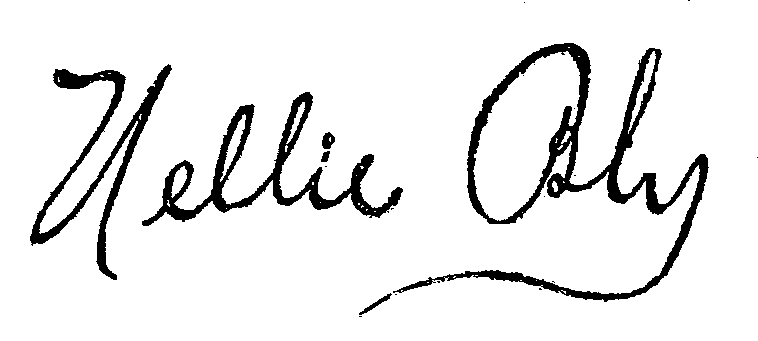
Who is Nellie Bly?


 Alright, not a food related person today, but one of my personal heroes of the Gilded Age.  This is an amazingly capable, strong woman, who deserves to be known, especially by those who have a thirst for adventure.

Born Elizabeth Cochrane on May 5th, 1867, Bly's father died when she was six years old, leaving her mother to care for a total of 15 children.  She moved to Pittsburgh at the age of 16 to find work, and dreamed of becoming a writer in an era when women who worked outside the home or the very narrow fields of nursing or teaching were often ridiculed.  Opportunity came by chance when at 18 she wrote a passionate anonymous response to the columnist Erasmus Wilson, who wrote for the Pittsburgh Dispatch as "Quiet Observer".  The paper was impressed, and placed an ad, requesting that she come forward, and giving her a nom de plume based on a popular Steven Foster song.


Such a domestic sentiment to try and temper her outspoken nature followed the early portion of Bly's career.  As she attempted to draw on her own experience, writing articles about conditions in tenements, and the difficulties faced by factory worker and maids, she pioneered many features of modern investigative journalism, going undercover and taking jobs herself, rather then simply relying on speaking to others.  Despite this groundbreaking approach, her work was often left in the middle of the society and garden section, the only place a select few women journalists had a voice.

In September of 1887, she managed to join the staff of  Joseph Pulitzer's The New York World, the beginning of her most amazing adventures.  She raced around the world in 72 days, beating all similar records set by men, exposed shady lobbyists, and covered the plight of unwed mothers.  She contrived her own arrest on larceny charges and reported her experiences being strip searched and spending the night in a coed jail, and interviewed controversial figures such as Susan B. Anthony and famous anarchist Emma Goldman. 
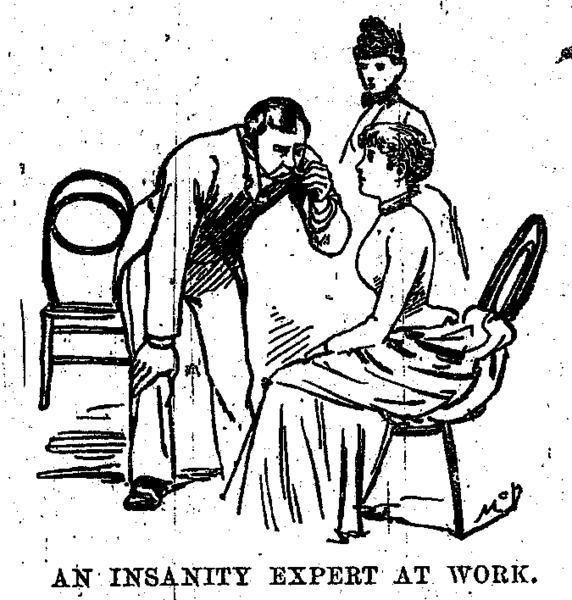
One such stunt which is particularly important in my mind, is the work Bly did to raise awareness of the plight of those who were considered insane.  In going undercover on Blackwell's Island, she entered the world of The Yellow Wallpaper, long before an understanding of issues such as anxiety disorders or  Post-Partum Depression.  While today psychological issues are still often poorly understood, and can still carry stigma, contempt, and fear, she courageously documented women who were wrongly imprisoned due to language difficulties or disabilities, or even due to something like disagreements with male family members.  While anxious but nonviolent to be admitted, and perfectly sane once inside, she was dismissed by doctors, threatened by nurses, and documented pest-filled food, cold, disease.  Here articles can be read in book form here under the title Ten Days in a Mad-House, and I would strongly recommend doing so. 

Authors like Nellie Bly remind us where we have been.  That only three generations ago, four at most, women could be imprisoned as mad simply on the word of their male relations.  We could not vote or run for office, and even if widows like my great-grandmother were prevented by social stigma from getting a better-paying job then the brutal life of a laundress.  In a divorce, the male spouse would keep whatever the woman had brought into the marriage, as well as the children, and have complete say over his wife's assets while married.  Women like Bly, Susan B. Anthony, and yes, even controversial spitfires like Emma Goldman are WHY we now have the rights we do.  Many women in the world still do not, and it's important to remember that, and not go backwards.  We stand on the shoulders of our great-grandmothers. I only hope I can live up to standing on the shoulders of the likes of Nellie Bly.

Direct from the Engine Room; Cooking With Power Tools

Via. Captain Hops

 It's been a while since I did a really Steampunk post, and I've been thinking a lot about all the different ways that someone can "Steam up" a menu, something we've talked about before.  Normally, I take a soft eclectic approach, and tend to think in terms of, say, and airship galley, going from port to port across the globe.  Someone like Aaron over at Steampunk Cookery takes a much more classical approach:  modern updates on popular Victorian and Gilded Age food.  Another potential way is by influencing aesthetics, such as reducing plastics or investing in interesting gadgets. 


Today, I want to go somewhere a little different with the concept; using normal tools most people already have, but in food preparation.  I see this as the engine room approach, like a bunch of guys together in the belly of whatever monstrous contraption they're payed to run.  If done right, this could also be a great show for dinner guests, though, especially where fire is involved. 

Before I get into ideas, though, I'm going to stress two things:

1)  Be Careful! Even in experienced hands, many power tools can lead to accidents.  Wear appropriate gear, and if you're young, or haven't dealt with tools much, conscript the help of someone who has more experience.

2)  Clean Your Kit!  Using dirty tools to make something you're going to eat is a bad plan!  New tools, or ones that have been scrupulously cleaned, please!

Now, on to ideas!
Rosemary Stuffed Lamb Bone from Ideas in Food

There is a lot of stuff out there for drills....wow.  The most obvious one is stuffing things, whether they be apples or zucchini. Easy enough...how about mixing bread dough?

More insane blowtorchery at Essential Ingredient
Another very popular tool to utilize is the Blowtorch.   This is one that looks particularly fun to my little pyro heart.  Amy Scattergood of The Daily Dish raves about using one for everything caramelizing sugar on pie or brulee (like one of the little ones designed for chefs), to roasting red peppers or making impressive fruit desserts on warm summer nights. She says:

You can also provide some last-minute color to a roast or gratin, quickly heat the bottom of a metal bowl to keep a frosting or meringue from breaking, or warm a chilled springform pan for quick release. (I got this trick from Spago pastry chef Sherry Yard, who does this for cheesecakes.) 

 What about using the heat of an engine to cook?  In one episode of Bizarre Foods with Andrew Zimmerman, the concept is referred to as "muffler meat":


As Zimmerman notes, these gentlemen are using a specially built box to safely cook their food.  Other sources have instructions, though, for basic cooking(as always, be careful), and under the slightly more dignified title of Engine Cooking, this concept even has it's own Wiki page, with even more useful links. 

Some approaches I found, on the other hand, were purely decorative, or seemed to be more for the sake of doing it then actually being more useful or convenient.  Spindle-turned root vegetables or using a mini orbital sander to grate nutmeg fit in this category for me.  At that point, the earthy quality that makes this sort of thing appealing to me is gone.

On that note, I leave you Carrot Cake--with power tools!


Updates and Facebook!

Hey all,

Things are going really well with the Blog.  GG's Kitchen isn't super-popular, but it's slowly but surely making onto the map...I was very surprised to see over a thousand hits last month!  I know, small potatoes for many blogs, but certainly the most attention a project of mine has ever received.  I am touched that people care about the odd blend of Victorian foodies in my little corner of the internet.

If you haven't noticed, we are now on Facebook as well!  I'm putting up a lot of pictures, odds and ends, and things I find fun, but don't want to do a full blog post on, so check it out, tell your friends, etc....

In other news, I am still in a bit of a housing limbo, which is why there are still tea menus, Saint's Days, reviews and the like, but no new pictures of my own cooking projects.  Otherwise, our family move to the California Bay Area has gone wonderfully...my spouse has had some great interviews so far, and I am now working as a server for a very well-run restaurant.  The support and help of our friends and family has been immeasurable, and I look forward to cooking, preserving, and baking again shortly!

Cherry Blossom Tea Menu


"In these spring days,
when tranquil light encompasses
the four directions,
why do the blossoms scatter
with such uneasy hearts?
Ki no Tomonori (c. 850 – c. 904)


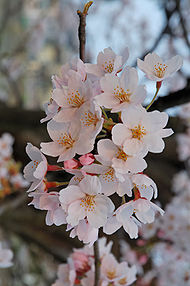
The next two weekends are the 45th annual Cherry Blossom Festival in San Francisco.  It is the second-largest cherry blossom festival in America (Washington D.C. is celebrating it's 100th year of celebrations this year, the original trees being a 1912 gift from Viscountess Chinda, wife of the Japanese Ambassador, and later a breathtaking 3000 trees from Mayor Yukio Ozaki of Tokyo), and the only one to take place in one of the three remaining Japantowns in America. 

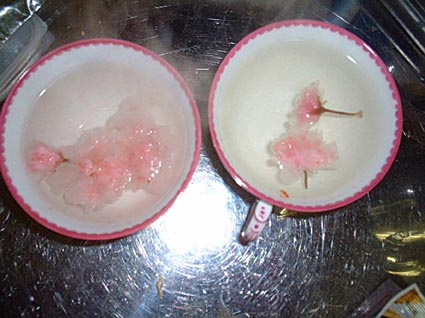
Sakura-yu
In Japan, the practice of going out and having picnics to view the blooming cherry trees is called Hanami, based on an older practice from China involving plum, rather then cherry trees. Old in this case, is slightly arbitrary, though, since Hanami has been going on since the Heian period (794-1185)!

There are often many traditional treats involved, using the pale pink of the blossoms, or even the flowers themselves for flavoring;  Sakura No Siozuke (the salted blossoms),

If you don't live in an area with a good Japanese grocery, here's a menu that would be great for a simple picnic in the lovely spring weather. It uses ingredients that should be easy to find, and is a great introduction to Japanese food.

Hanami Dango (a sweet treat made with glutinous rice)

American Hanami Menu:

Sekihan Rice (rice with adzuki beans and black sesame seeds)

Simple Temakizushi(hand-rolled sushi--the way it's usually eaten at home or picnics, rather then when purchased pre-made); take sushi rice, fillings such as fish, avocado, and crab(or even the salted cherry blossoms above), and cut nori seaweed into squares. Each person  makes their own, using the nori as a base, and then wrapping it around the rice and fillings.  For more information and ideas, try here, here and here! As simple or complicated as you want to make it.

Yakitori (Grilled chicken--very good cold!)

This pretty Hanami Salad would be a great addition as well.


Tea Suggestions:

Matcha, good quality whole-leaf green tea, or cherry blossom tea like Sencha Sakura or  Harney & Sons.

Dessert? Great Sakura Mochi recipe here.

Is the Premiere Issue of Vintage Style Worth It?


Just before moving, I noticed this one on the magazine stand and got a copy.  While normally $9.95 would be out of my price range for a magazine, I liked the curtains made out of old cloth napkins (aren't they cute?!), and wanted some reading material for the road.

Published by the same people who do Country Almanac(Country Living, Country Home, Romantic Homes, etc.), it is professionally done, with beautiful glowing photographs and a nice range of styles within the unifying theme of vintage decor.  I particularly enjoyed the spread on different ways to use old Mason jars (a switch I've been trying to make myself), and the gorgeous distressed furniture in some of the homes.  There is also a useful article on how to go about shopping at flea markets, particularly for large furniture pieces. 

However...on the whole, I personally think they have missed the mark on their potential demographic.  Sure, home decor magazines are normally geared towards older housewives, who can afford to dabble in redecorating and design. This particular breed of Retro, ranging from Victorian to mid-Century and mixing in modern and even industrial or re-purposed pieces is huge right now with twenty and thirty-somethings.  Foodies(although I appreciate the lack of food in a design magazine).  Neo-Victorian, Steam- or Dieselpunk, and yes, even Hipsters.  Some of the advertising hits the mark, like creative vinyl transfer wall art.  Others, not so much(a tacky John Deere Cuckoo Clock for $200? Not when you can find the same sort of junk to put on your hipster wall ironically from a thrift store somewhere). 

I'll be looking for the next issue, if nothing else to see if they manage to realize the potential for a younger demographic.  I'm not sure, though, if I'm willing to pay full price for it, so we'll see.

For more examples from inside the magazine, check out this post over at Dutch Door Cottage, and this one from High Prairie Farm Girl.

Chocolate Done Right

From Co-Operative Food UK
Where does your chocolate come from?

For my grandmother, buying chocolate was Ritual.  While she no longer wore a best hat or wore gloves, it was easy to imagine her slipping them on as she prepared for an outing to buy chocolate.

Les Marais Chocolates, Santa Monica, CA
It was part of hospitality, and I felt so very grown up when I was lucky enough to be at her house when she was going out to perform this feat.  We drove in the car to the original Mrs. Cavanaugh's, since my grandmother had known her personally back in the day.  Inside, I would smell the chilled air and laugh about the picture on the wall of a chocolate moose while we waited.  Then the choosing began...who was coming?  What were their dislikes?  Allergies?  My grandmother hovered over the glass case like a nervous bird, picking each chocolate individually.  Woe befall me then if I tried to interject!  These were for the adults, to be arranged carefully on a plate or in a dish, even if no one touched them.

Such attitudes have mostly fallen by the wayside, which makes sense when most chocolates are mass-produced, and sold in preselected mixes at the grocery store.  This is not the way is should be, though, and American chocolate in particular has suffered for it.  Hershey's is waxy.   Most candy-bars more candy coating then cocoa.  Chocolate risks become a condiment, with no more thought given then to a bottle of Heinz Ketchup.

In the meantime, our disconnection with where our chocolate comes from risks endangering chocolate all together.  Problems like climate change and deforestation mean that the cost of plants like cacao, peanuts, and coffee grown in Africa are expected to soar in the near future, due to a combination of environmental factors and human rights issues. 
Chocolate-covered marshmallow from Theonista

We, as the consumers, rarely can predict the rout that our chocolate (or other exotics like cane sugar or vanilla) took to reach us, but we can do our best on our end to support those who bring chocolate to our tables this Easter season.

Buy from local shops, like  my grandmother did, keeping your money with small local businesses. If you don't know one in your area, try search functions like Yelp to find one.  My favorite while living in Idaho was Florence's, a small mom and pop place.  Don't be afraid to ask questions, either.  The modern American business climate is often hard on small stores, who have trouble competing with large monopolies like WalMart and Costco even on specialty items.  The small local business where you live might not know where it's cocoa comes from either...unless you ask questions.  Chocolate often passes through many hands before it reaches you.

Schurra's Fine Confections
If you can't find a local shop, here is a list of how the large brands stack up in terms of ethical practices, particularly child labor(as well as a list here of smaller, more ethical brands).  While looking for products that claim to be Fair Trade(meaning that the farmers and workers who harvest the crops are given a livable wage), can help, some large brands have recently fallen under criticism for using it without following the requirements.

Today, my family will be checking out a South Bay staple for the first time: Schurra's Fine Confections.  While I'm not putting on a hat and gloves, I will be looking for a small local business that knows it's chocolate--from beginning to end--to buy my candy this Easter.

Update:  I ended up making a holiday out of it and checking out three chocolate shops in South Bay today.  Schurra's, which I listed above, was first.  Classy shop.  Not the most creamy chocolate, but the egg we tried was hand-made and much better then a similar peanut butter-filled item from the grocery store. 

Next, we went down to Los Gatos and checked out the Powell's Sweet Shop(local chain).  This is very much a candy store...every candy you can think of, with a little chocolate counter to round things out.  Not what I was looking for today, but my kids loved it! At the very least, between here and the imports at a store like World Market, we should have Christmas amply covered.  Also got myself a pack of the classic Choward's Violet Mints from the 30's. 

Last was Chocolate Dream Box.  Very, very good.  I would go to Schurra's unless I was in the area, but theirs tasted like the best quality, highest chocolate content, and the individual chocolates in the case were dazzling. 

Great Grandmother's Easter

More beautiful vintage cards can be seen at the Greencastle Museum website. 


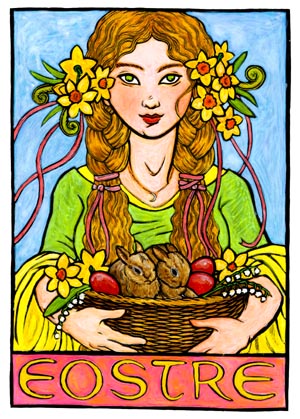
Art by Thalia Took
Easter time is a unique blend of  Catholic and Pre-Christian traditions all over Europe.  The name of the holiday itself comes from a Germanic goddess, and variations on the name range from Eostre to Ostara. Linguists theorize a Proto-Indo-European word awes, meaning "to shine", which would explain similarities to Greek and Roman dawn goddesses(Eos and Aurora) as well as the minor Indian goddess Ushas.  Whatever the case, at least in Northern Europe, common themes are flowers, hares (the predecessor of the Easter Bunny), and eggs. This linguistic link does not carry over into cultures that speak Latin-based languages, however, where Easter is called La Pasquette, Paques, or Pascua. 

The date of Easter changes each year(unlike stationary holidays, like Christmas) because it falls on the Sunday after the first full moon following the Spring Equinox.  Why this reliance on the lunar calendar?  Because the Council of Nicaea reasoned that Passover, which falls on that new moon, would have come directly before the death of Christ. 

 So what did our great grandmothers do for Easter?  It depends...while many traditions translate easily to similar American customs, others are very unique. 

There are eggs a-plenty:

 
Spectacular Swiss Eggs from You Craft Me Up
Romanian Eggs
From Poland

As well as bread and cakes:
Greek Easter Bread, recipe here. 
Swiss Easter Cake
Hot Cross Buns, a favorite at our house.


In Sweden, little children also dress up as Easter Witches, complete with painted red cheeks and freckles, and go door-to-door for treats, based on a tradition that all the local witches fly over the water to a mountain in Northern Germany the Thursday before Easter for a meeting with the devil (another one of those "huh" moments...some suggest the tradition dates to a rather ugly witch hunt in the 1600's). 

A lovely Victorian Easter Witch
Interested in other strange Easter traditions?  Here's a collection! 

Whether Christian, Pagan, or purely secular, this time of spring is a wonderful time to celebrate new life, and the return of light over darkness.  Happy Easter!