Ham bone from a Sunday baked ham (as well as all the drippings in the bottom of the pan)
Chicken bones from hot wings
Carrots, garlic, onion, celery
Tops of fresh and roasted peppers
Corn cobs
Tomato tops
A few whole peppercorns
Thyme
Parsley
Bay leaves

"I well remember that last meal on the Titanic.We had a big vase of beautiful daffodils on the table, as fresh as if they had just been picked. Everybody was gay, and people were making bets on the probable time of this record-breaking voyage."
--First-class passenger Lady Duff-Gordon
I have owned this book for about ten years now, and still smile when I dust it off. As my experience with cooking grows, I find that different parts of it speak to me. This time around, I've pulled it off the shelf for a very exciting reason: my local Steampunk group, The Innovative Society of Victorian Irregulars, has decided to do a Titanic dinner as our big spring event next April. With good reason, too. The evening of Saturday, April 14th, 2012 will mark the 100 year anniversary of the last meal served on the Titanic, which met it's infamous demise at 2:20 am on April 15th, 1912.
 |
| Prints available from allposters.com |
 |
| From the Titanic Historical Society site. |
If planning a party, the Appendix is singularly useful, including advice on Edwardian customs, proper invitation ettiquete, what to wear, and table settings. There is also a fascinating grouping of mini-biographies, allowing you to assign guests the persona of a specific guest if so desired.
RMS Titanic First Class Dinner MenuHors D'oeuvre Varies |
Consomme Olga | Cream of Barley |
Filet Mignons Lili
Saute of Chicken, Lyonnaise
Vegetable Marrow Farcie
Lamb, Mint Sauce
Roast Duckling, Apple Sauce
Sirloin of Beef, Chateau Potatoes
Green Peas | Creamed Carrots |
Parmentier & Boiled New Potatoes
Punch Romaine
Roast Squab and Cress
Cold Asparagus Vinaigrette
Pate De Foie Gras
Celery
Waldorf Pudding
Peaches in Chartreuse Jelly
Chocolate & Vanilla Eclairs
French Ice Cream

Something else to keep in mind is that part of what was considered impressive about the Titanic was that it was state of the art for the era. In the kitchens, massive refrigeration unites, ovens, and stoves meant that cooks were capable of pulling off all of the same tricks as the finest restaurants of the day. What a thrilling thought for the technophile!
 While I would suggest getting the book, due to the plethora of additional useful information, recipes can be previewed at these sites:
La Belle Cuisine
Eras of Elegance
The Titanic About.com guide by Donna Pilato
And for a very interesting provisions list, go here (the scale of it is boggling).
Category:
Book Review,
history,
spring,
the Edwardians,
The Titanic
1 comments


The usual: Onion and garlic peels, carrot tops, celery.
Chicken bones
Pork neck bones from the butcher's
Skins and seeds from roasted red peppers
More sweet potato peels
Apple peels
Leftover caramelized onions
Tomato tops
Cauliflower ends
Chicken bones
Pork neck bones from the butcher's
Skins and seeds from roasted red peppers
More sweet potato peels
Apple peels
Leftover caramelized onions
Tomato tops
Cauliflower ends
Category:
Stock
0
comments

Locutus v3.0 is no more. A year ago I detailed the defeat of the original Locutus...it's multicellular colony devastated by bad planning, early morning, and the hint of chlorine in our tap water.
Locutus 2.0 and 2.5 were both dispatched by negligence rather then wonton cruelty. Yes...two in a row. The first molded, the second I dried out while trying to prevent my previous mistake. This is one way keeping a sourdough start was much, much easier in the San Francisco Bay Area. The air was always slightly humid, even inland.
Now, 3.0 proved a very interesting mistake. Why, you ask? Because I discovered that adding honey instead of sugar to a starter is a fatal error. At first, it seemed like a great idea: I've been trying to cut down on processed sugar, so honey was what was readily available. It's concentrated, so I thought that only a half cup or so in addition to more flour and water would help add some zip to the yeast that was getting bogged down in my whole wheat flour.
Not so....oh...so very not so.
Turns out honey is antibacterial, so much so that some doctors have been studying using it to treat antibiotic-resistant strains of bacteria. How? They're not entirely sure, but it seems that at least one aspect of this ability is that one of the natural enzymes from the bees is similar to hydrogen peroxide. In fact, honey was a common remedy up until the invention of penicillin.
 |
| From InfoBarrel |
Wow...ok, then. That would explain why my bread didn't rise very well, and tasted like alcoholic dirt with a side of vinegar. Never making that mistake again. While there are many recipes that call for a little honey, I've noticed now it's usually mixed in at the end. Lesson learned.
As for honey, it turns out there are places selling very expensive antibacterial honey online, but why do that unless you're treating something you should be seeing a doctor for? Unless treating a child under the age of one (due to a slight risk of botulin toxin in improperly stored honey), raw local honey seems to be a safe and effective way to prevent infection on topical applications, especially bacterial or fungal infestations, or issues like acne.
Learn something new every day.
For more advice on resuscitating your own sourdough starter, look here, and at this very helpful blog post entitled The Day the Starter Died.
On that note:
Category:
bread,
Locutus of Borg
0
comments
Starting to get hints of early fall flavors in the stock pot this week.Yay! I adore fall flavors, and have been looking forward to them.
Beef bones
The usual (carrots, celery, onion, garlic)
Green pepper tops
Sweet potato peels
Corn cobs
Spinach stems
Tomato tops
Used lemon halves
Zucchini ends
Beef bones
The usual (carrots, celery, onion, garlic)
Green pepper tops
Sweet potato peels
Corn cobs
Spinach stems
Tomato tops
Used lemon halves
Zucchini ends
Category:
Stock,
summer
2
comments
5) It's easy. If you aren't familiar with Bountiful Baskets, here's the deal: it's a co-op. Every Monday, you sign in on the website, and place an order. There's a small charge the first time you do it, so that they can buy a new pair of baskets. Other then that, though, it's the same every week--$15 plus a small handling fee for a regular basket, $25 for organic. There are sometimes additional items you can purchase, too, like a Mexican basket, or bread. You print out your number, and on the listed time and day, go pick up your produce. You're asked to come early and help when possible, at least every two months or so. Try it once, get over the "new and scary", and you'll be hooked.
4) It's frugal. While I buy a couple of vegetable items at the store or farmer's market (berries when in season, the holy trinity of onions, celery, and carrots), my single, basic basket is enough produce for our family of four(two adults, a Kindergartener and a toddler) for an entire week, often with some to spare. If any leftovers start getting too ripe, I make jam, or put them in the stock pot. Everything gets used. For the first time in a very long time, my kids are able to eat fruits and veggies whenever they want a snack. About $50 worth of produce for $15.
3) You support local farmers, and small business. A lot of the produce at the grocery store is shipped from half-way around the globe to get to your table. A bag of grapes from Chile are more expensive, require more chemicals to get to you without spoiling(often ones that are illegal in America), and has required the use of a lot of fuel(traveling by boat, truck, etc,etc).
A lot of effort goes into making the produce travel as little as possible. Since I live in Idaho, I often get local Idaho potatoes, fruit from Utah or Oregon, and veggies from California, but if you're in a different part of the country, you might get a completely different basket.What you get, though, has to be in season because of the effort for local produce.
2) It helps you eat seasonally. Farmers grow different varieties depending on the market, and when it comes to shipping long-distance, fruit and vegetables that have a lot of flavor often lose. Eating seasonally helps make it easy to figure out what will be fresh, ripe, nutritious, and full of flavor. It has been the way our ancestors ate for millions of years. It also seems to encourage my children to try new things(can't eat nothing but apples if we only have them in fall), and makes when we DO have a particularly loved fruit or vegetable that much more special.
1) It will make you grow as a cook. Signing up for Bountiful Baskets has forced me to plan the way we eat differently. It used to be that I would plan out meals, weeks in advance. Now, I wait to see what I got in the basket, then go shopping later on Saturday, with a week's plan based on meals that compliment my produce and make the best use of it. Instead of eating variations on the same meals, I look for ways to adjust favorites, and learn technique that is applicable across the board, rather then a set recipe. For example, I got another head of cauliflower this week, and still haven't used up all of the last one--it's time to look around online, flip through my vintage and historic cookbooks, and rise to the occasion!
 |
| The Bountiful Basket Facebook Page |
4) It's frugal. While I buy a couple of vegetable items at the store or farmer's market (berries when in season, the holy trinity of onions, celery, and carrots), my single, basic basket is enough produce for our family of four(two adults, a Kindergartener and a toddler) for an entire week, often with some to spare. If any leftovers start getting too ripe, I make jam, or put them in the stock pot. Everything gets used. For the first time in a very long time, my kids are able to eat fruits and veggies whenever they want a snack. About $50 worth of produce for $15.
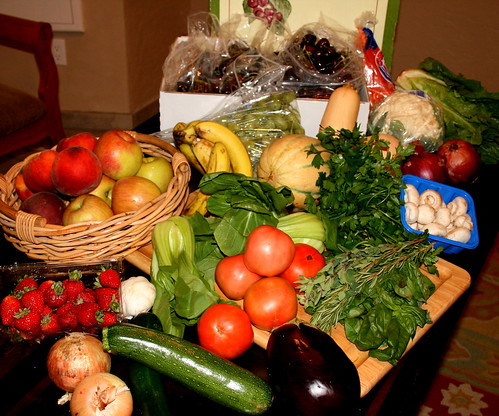 |
| A basket posted by the author at Bunches and Bits--check out everything she did with it! |
3) You support local farmers, and small business. A lot of the produce at the grocery store is shipped from half-way around the globe to get to your table. A bag of grapes from Chile are more expensive, require more chemicals to get to you without spoiling(often ones that are illegal in America), and has required the use of a lot of fuel(traveling by boat, truck, etc,etc).
A lot of effort goes into making the produce travel as little as possible. Since I live in Idaho, I often get local Idaho potatoes, fruit from Utah or Oregon, and veggies from California, but if you're in a different part of the country, you might get a completely different basket.What you get, though, has to be in season because of the effort for local produce.
 |
| This message brought to you by the Institute for Responsible Technology. |
2) It helps you eat seasonally. Farmers grow different varieties depending on the market, and when it comes to shipping long-distance, fruit and vegetables that have a lot of flavor often lose. Eating seasonally helps make it easy to figure out what will be fresh, ripe, nutritious, and full of flavor. It has been the way our ancestors ate for millions of years. It also seems to encourage my children to try new things(can't eat nothing but apples if we only have them in fall), and makes when we DO have a particularly loved fruit or vegetable that much more special.
 |
| To say The Toddler is excited for apple season is a bit of an understatement. World Community Cookbook. |
1) It will make you grow as a cook. Signing up for Bountiful Baskets has forced me to plan the way we eat differently. It used to be that I would plan out meals, weeks in advance. Now, I wait to see what I got in the basket, then go shopping later on Saturday, with a week's plan based on meals that compliment my produce and make the best use of it. Instead of eating variations on the same meals, I look for ways to adjust favorites, and learn technique that is applicable across the board, rather then a set recipe. For example, I got another head of cauliflower this week, and still haven't used up all of the last one--it's time to look around online, flip through my vintage and historic cookbooks, and rise to the occasion!
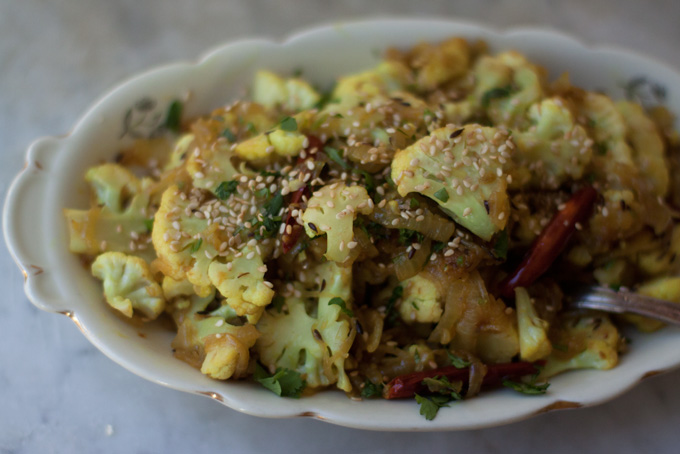 |
| Spicy Cauliflower with Sesame from 101Cookbooks |
Category:
frugality,
fruit,
lists,
plugs,
vegetables,
vegetarian/vegan
3
comments

The reason lies in organization.
Escoffier began his career at 13, as an apprentice in his Uncle's restaurant in Nice, France. At the time, French cuisine was dominated by the ideas of Marie-Antoine Careme (June 8th, 1784-January 12th, 1833) who had served as head chef for the future George IV of England, Emperor Alexander I of Russia, and Baron James de Rothschild.
 |
| A menu in Escoffier's hand, from the blog Les Recettes de Lous la Vache |
 |
| The Hotel Ritz, opened by Ritz and Escoffier in 1898 |
For a more detailed biography, look here.
A translated compilation of Escoffier's writing is available from Amazon here.
Category:
biographies,
Regency,
the Edwardians,
the Victorians
2
comments
